
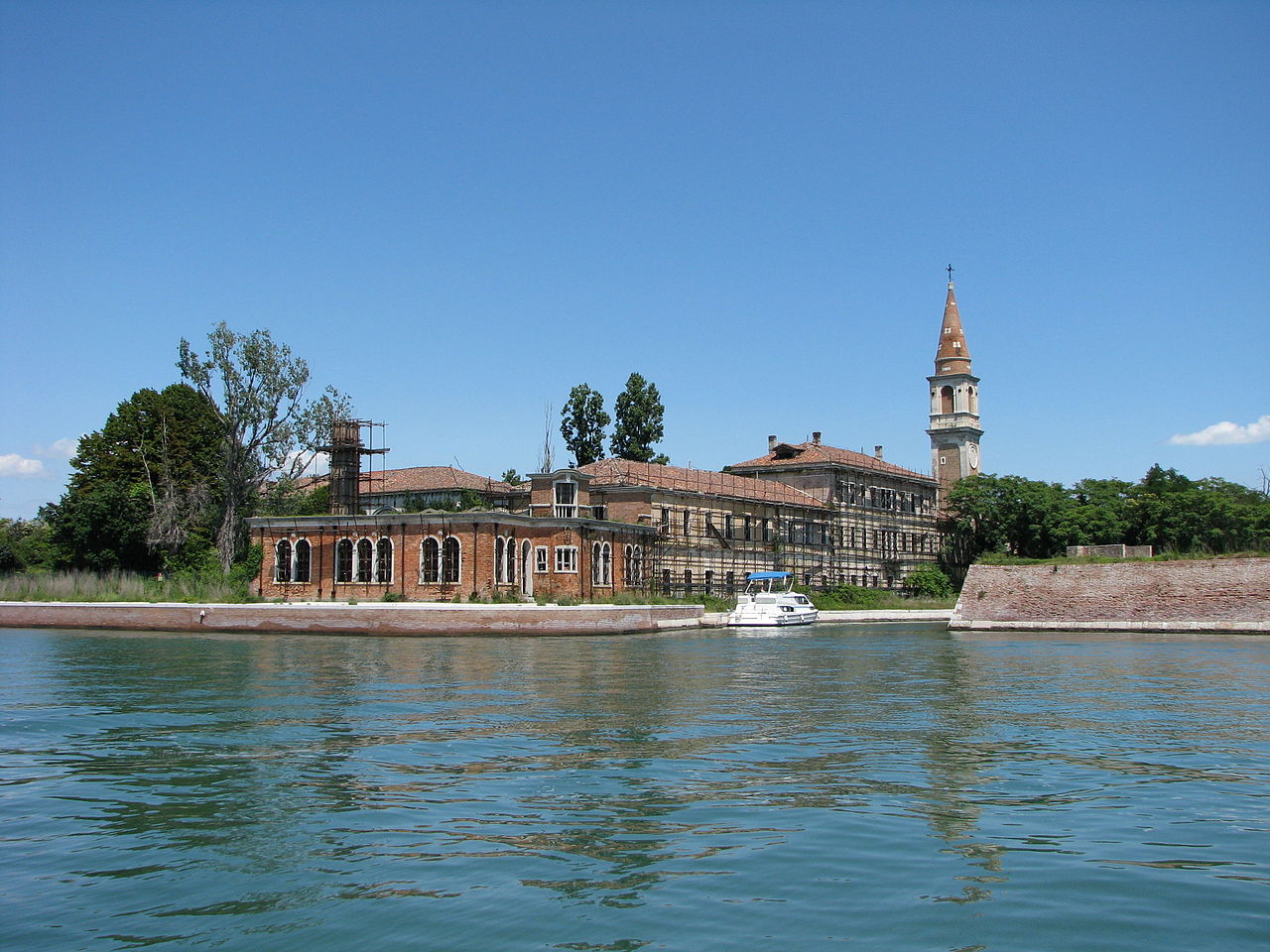
Between Venice and the Lido, where the waters of the Adriatic lap against mud banks older than memory, lies Poveglia—an island that whispers of death in the Venetian dialect. Here, in seventeen acres of cursed earth, the bones of over 100,000 souls rest beneath soil so pale with human ash that locals call it the white earth of the dead.
The island's name appears in chronicles as early as 421, when it was nothing more than another fertile patch in the lagoon's constellation of settlements. For nearly a thousand years, farmers tended its soil and fishermen mended their nets on its shores. But in 1379, as war swept across the Veneto, the islanders fled, abandoning Poveglia to silence and the tide.
The Lazaretto Years
What followed transformed this humble farming community into Italy's antechamber to hell. Beginning in 1776, the Venetian Republic designated Poveglia as a lazzaretto—a quarantine station where ships suspected of carrying plague would discharge their human cargo. For more than a century, until 1814, every vessel that entered the Adriatic's northern reaches faced this grim inspection.
The island's purpose was containment, but containment became slaughter. When the plague ships arrived, their holds thick with the stench of death and fever, the living and the dying were herded together onto Poveglia's shores. Here they waited—some to recover, most to perish. The healthy mingled with the sick, the desperate with the resigned, all under the Mediterranean sun that beat down mercilessly on their makeshift shelters.
Bodies accumulated faster than graves could be dug. The Venetian authorities, ever practical, ordered mass cremation. Great pyres burned day and night, their smoke visible from the campanile of San Marco. The ash was mixed into the soil, and when the fires finally died, Poveglia's earth had transformed into something altogether different—a pale, powdery loam that would crunch underfoot with the sound of ground bone.
The Doctor's Madness
In 1922, the island's dark purpose evolved but never lightened. The quarantine buildings were converted into a nursing home for the elderly and infirm—a place where Venice could quietly warehouse its inconvenient lives. It was here, in the shadow of the plague pits, that the island's most sinister chapter began.
Local legend speaks of a doctor who arrived in the 1930s, a man whose therapeutic methods defied both medicine and mercy. Patients whispered of surgical experiments conducted in the bell tower, of screams that echoed across the lagoon in the pre-dawn hours. They spoke of lobotomies performed with crude instruments, of bodies that disappeared in the night, of a physician whose curiosity about the human mind had curdled into something monstrous.
Whether truth or folklore born of genuine suffering, the stories persist. The tower—that 12th-century survivor of the demolished church of San Vitale—looms over Poveglia still, its windows dark as empty sockets, its stones said to echo with sounds that have no earthly source.
What Remains
Today, Poveglia stands abandoned but not empty. The nursing home closed in 1968, leaving behind buildings that rust and crumble in the salt air. Vegetation has claimed much of the island, but beneath the encroaching green, the infrastructure of death endures. The octagonal fort on the smaller adjacent island broods like a medieval gargoyle. The hospital buildings, their windows shattered, their walls stained with decades of neglect, seem to exhale the accumulated sorrow of centuries.
The soil itself remains Poveglia's most disturbing monument. Visitors report that their feet sink into earth that seems too soft, too yielding, as if the very ground were composed of something other than dirt and clay. And sometimes, when the tide is low and the wind stirs the surface, fragments of bone work their way to the surface—ribs, vertebrae, pieces of skull bleached white as coral.
The bell tower still stands sentinel over this necropolis, though its bells fell silent long ago. Napoleon's forces demolished the church in 1806, but the tower survived, repurposed as a lighthouse to guide ships past the island of the dead. Now it serves no purpose save to mark the spot where so many stories ended.
The Battle for Paradise
In 2014, the Italian state attempted to auction Poveglia, hoping to raise revenue from its blood-soaked real estate. The highest bid came from Luigi Brugnaro, who offered €513,000 for a 99-year lease. His plans spoke of restoration, of transforming the island into something clean and profitable. But the deal collapsed—whether due to insufficient funds or the island's own resistance to such sanitization depends on whom you ask.
A citizens' group, Poveglia per tutti (Poveglia for Everyone), fought to prevent privatization, raising nearly half a million euros from thousands of contributors. Their vision was different: a public park where the dead could rest in dignity, where history would be honored rather than erased. After years of legal battles, they succeeded. In 2025, they were granted a six-year concession to develop the northern portion of the island.
It is a curious redemption for a place so thoroughly steeped in suffering—the idea that community action might somehow cleanse what centuries of neglect could not. Yet Poveglia's essential nature seems unlikely to change. The ash-white soil remains. The bones continue their slow emergence with each tide. And the tower watches over it all, a stone witness to the truth that some places, once marked by death, never quite return to the realm of the living.
As Venice continues to sink millimeter by millimeter into the Adriatic, Poveglia endures—neither fully abandoned nor fully reclaimed, a reminder that in the lagoon's glittering expanse, beauty and horror lie separated by nothing more than a stretch of dark water and the mercy of forgetting.
Discussion (0)
Log in or register to join the discussion.
No comments yet. Be the first.